 EN
EN
A practical sourcing manual for brands, importers, and product developers
Reference manufacturer example: Shaoxing City Ohyeah Textile Co., Ltd., eco-friendly fabric specialist (bamboo, organic cotton, rayon, Lenzing™ Modal, TENCEL™ Lyocell, recycled polyester, sustainable viscose blends)
How to Use This Guide
This guide is for the person who has to place the order, not for a marketing team. Assume from the start that you are accountable on three fronts at once:
1. The fabric performs (shrinkage, fastness, hand feel, consistency roll to roll).
2. The claim survives scrutiny (a regulator, retailer, or journalist asks you to prove "bio-based").
3. The commercials work (landed cost, MOQ per colour, lead time you can promise your customer).
Most sourcing failures follow a predictable pattern: a buyer optimises one of these three, then discovers the other two too late. Sections 1–3 build your technical vocabulary, sections 4–7 give you the evaluation tools, and sections 8–10 are the executional playbook.
One distinction runs through the whole guide: bio-based, biodegradable, recycled, and organic are four independent properties. A fabric can be 100% bio-based and not biodegradable. It can be certified organic and not biodegradable. It can be recycled and contain zero bio-based carbon. Suppliers and buyers collapse these into one word ("eco"), and that is where legal and quality risk enters.
1. What Is Bio-Based Fabric?
1.1 The definition that matters commercially
Bio-based fabric is textile made from fibres whose carbon originates wholly or partly from renewable biological feedstock (plants, trees, agricultural residues, sugars) rather than from fossil petroleum.
Two words in that definition carry most of the risk.
"Partly." Many bio-based synthetics are only 30–40% bio-based by carbon; the rest is fossil. A supplier who says "bio-based" without giving a percentage has told you almost nothing.
"Carbon." Bio-based content is a measurement of feedstock origin. It says nothing about environmental performance, nothing about end-of-life behaviour, and nothing about quality.
1.2 The three families of bio-based fibre

In practice, bio-based fibres sort into three families. The table sets out what each family is, common market examples, how heavily the material is processed, and the bio-based content you can expect.
| Family | What it is | Examples | Processing intensity | Bio-based content |
|---|---|---|---|---|
| 1. Natural fibres | Fibre harvested and mechanically processed; the plant structure survives | Cotton, organic cotton, hemp, flax/linen, jute, bamboo linen (bast) | Low; mechanical, retting | ~100% |
| 2. Man-made cellulosic fibres (MMCF) | Plant/wood pulp chemically dissolved and re-spun into new filament | Viscose/rayon, bamboo viscose, Modal, Lenzing™ Modal, TENCEL™ Lyocell, cupro | High; chemical dissolution | ~100% (feedstock), but chemically regenerated |
| 3. Bio-based synthetics | Petrochemical-style polymers built from bio-derived monomers | PLA (Ingeo), PTT (Sorona®), bio-PET, bio-polyamide (PA11 from castor) | High; fermentation + polymerisation | Partial; e.g. Sorona® PTT ≈ 37% renewable content; bio-PET ≈ 30% |
Family 2 is the one most buyers get wrong. Bamboo viscose, viscose, modal, and lyocell all start as plant cellulose and are renewable, but they are regenerated fibres. Legally and technically they belong to the rayon family, not to the "natural fibre" family. This is the single largest source of enforcement action in the category (see §1.4).
1.3 Four independent axes: never conflate them
Each of the four properties answers a different question and is proven by a different document:
| Axis | Question it answers | How it is proven |
|---|---|---|
| Bio-based | Where did the carbon come from? | Radiocarbon (¹⁴C) testing: ASTM D6866, ISO 16620-2 (bio-based carbon content); EN 16785-1 (total bio-based content, via radiocarbon + elemental analysis) |
| Biodegradable / compostable | What happens at end of life, under defined conditions? | EN 13432, ISO 14855, ASTM D6400 / D6868; TÜV "OK compost" schemes |
| Recycled | Was the input a waste stream? | GRS, RCS (Textile Exchange) |
| Organic | Was the crop grown without prohibited inputs? | GOTS, OCS (Organic Content Standard) |
A worked example shows why this matters. Organic cotton is bio-based (Family 1) and certifiable under GOTS. But a GOTS certificate does not certify a bio-based percentage, and it does not certify biodegradability. If your marketing needs all three claims, you need three separate evidence documents.
1.4 The terminology trap that generates fines: "bamboo fabric"

Of all the naming issues in the bio-based category, this is the most commercially dangerous, and anyone buying bamboo fabric needs to understand it.
Soft, drapey "bamboo" fabric is almost always bamboo pulp put through the viscose process, producing chemically regenerated cellulose. Under US FTC fibre-labelling rules, such fabric must be labelled as rayon, or with a permitted construction that begins with the generic fibre name: "viscose from bamboo". Labelling it simply "bamboo" or "natural bamboo" is a labelling violation. The FTC has pursued enforcement against major US retailers over textiles labelled as bamboo, with record penalties reported in this area. The FTC has also stated that there is no scientific evidence that "rayon from bamboo" products are biodegradable. A "biodegradable bamboo" claim is an additional, separate exposure on top of the naming issue.
Genuine mechanically processed bamboo does exist: bamboo bast fibre, sometimes sold as "bamboo linen". It is legitimately a natural fibre, and it is coarse, stiff, linen-like, expensive, and rare. It is not what most "bamboo" fabric is.
In your PO and on your care/content label, write the legal fibre name (e.g. 95% Rayon from Bamboo / 5% Spandex), and keep the marketing word "bamboo" out of the fibre-content field. Ask your supplier to print labels to your specified wording rather than their default wording.
1.5 Why the regulatory clock is now the buyer's problem
Two regimes now govern how you may talk about the fabric you are buying.
EU. Directive (EU) 2024/825, "Empowering Consumers for the Green Transition" (ECGT / EmpCo), published in 2024. Member States must transpose it by 27 March 2026, and its provisions become enforceable from 27 September 2026. It bans generic environmental claims, words like "green", "eco-friendly", "sustainable", "climate-friendly", unless you can demonstrate recognised excellent environmental performance (holding the EU Ecolabel, for example). It also restricts claims based on offsetting and on unverified self-made labels.
US. The FTC Green Guides, plus the fibre-labelling rules described in §1.4, applied to unqualified "biodegradable", "eco", and fibre-origin claims.
For sourcing, the consequence is clear: the fabric you buy must arrive with substantiation documents, not adjectives. When you request a quotation, request the evidence pack in the same email (see §7.4). Retrofitting substantiation after the goods have shipped is expensive and often impossible, because the tests must be run on the specific production lot.
1.6 Where a specialist supplier fits in the market

Ohyeah Textile's published range is a fair illustration of a typical eco-focused mill portfolio, and it maps cleanly onto the three families:
- Family 1 (natural): Organic Cotton Fabric
- Family 2 (MMCF: the core of the offer): Bamboo Fabric, Rayon Fabric, Lenzing™ Modal Fabric, TENCEL™ Lyocell Fabric, sustainable viscose blends
- Not bio-based, but adjacent in the sustainability conversation: Recycled Polyester (REPT)
Certification set held: OEKO-TEX®, GRS, GOTS, OCS, FSC®
Published performance benchmarks: colour fastness 4–5, shrinkage <5%, anti-pilling 3–4
Company profile: Shaoxing-based, roughly 14 years' focus on eco-friendly fabric with deep bamboo specialisation, exporting to New Zealand, Australia, Vietnam, the US, Canada, Chile, and Germany
Note what this portfolio does not automatically include: a stated bio-based percentage under ASTM D6866 / EN 16785-1, or a compostability certificate. That is normal and not a criticism, cellulosic mills certify on the organic, recycled, forestry, and chemical-safety axes. It simply means that if your brand claim requires a bio-based percentage or a biodegradability claim, that is a separate test you must commission and pay for. Section 7 explains how to close this documentation gap.
2. How Is Bio-Based Fabric Made?
Understanding the production chain helps buyers trace quality complaints to a specific stage. Once the source is known, a corrective action request can identify the fault instead of saying only that "the fabric is bad".
2.0 Stage map
Feedstock → Pulp/Polymer → Fibre → Yarn → Greige fabric → Dyeing & Finishing → (Printing) → Inspection & Packing
Two things follow from this map. Hand feel, shrinkage, GSM, and width are finalised in Finishing, not in weaving.A buyer who audits only the knitting floor is auditing the wrong stage.
2.1 Stage 1: Feedstock
| Fibre | Feedstock | What to verify |
|---|---|---|
| Bamboo viscose | Bamboo pulp | FSC® chain of custody; pulp mill identity |
| Viscose / Modal | Wood pulp (beech, eucalyptus, pine) | FSC®/PEFC; ancient/endangered forest sourcing policy |
| TENCEL™ Lyocell | Eucalyptus / managed plantation | Lenzing licence + FSC® |
| Organic cotton | Certified organic cotton | GOTS/OCS transaction certificates back to gin |
| PLA | Corn / sugar | Feedstock origin; food-vs-fuel policy |
| Sorona® PTT | Plant-derived PDO + fossil TPA | Stated renewable % (≈37%) |
A note on FSC®: FSC certifies forest management and chain of custody, that is, it certifies the wood. It says nothing about the dyehouse. Do not accept an FSC certificate as evidence of a clean dyeing process.
2.2 Stage 2: Pulp to fibre: three routes, three environmental profiles
This is where the idea that "all cellulosics are the same" breaks down, and where genuine differentiation exists:
| Route | Chemistry | Environmental profile | Fibre outcome |
|---|---|---|---|
| Viscose (incl. bamboo viscose, standard rayon) | Alkali steeping + carbon disulphide (CS₂) xanthation, then acid regeneration | Open or partly closed systems; CS₂ and sulphur emissions are the key risk; performance varies enormously by mill | Soft, fluid drape, low wet strength |
| Modal | Modified viscose process, higher-tenacity spinning | Similar chemistry to viscose; branded Lenzing™ Modal is produced under tighter recovery and emission control | Higher wet strength than viscose; better wash durability |
| Lyocell | Direct dissolution in NMMO (amine-oxide) solvent; an inherently closed-loop process with very high solvent recovery | Best-in-class among MMCF; no CS₂ | Strong wet and dry, smooth, low-fibrillation when finished correctly |
Bio-based synthetics follow a different route entirely: fermentation of sugars → bio-monomer → polymerisation → melt spinning into filament or staple.
This matters because if your customer asks whether your viscose is responsibly produced, the answer depends on the pulp and fibre producer, not on the fabric mill. That is why branded fibres (TENCEL™, Lenzing™ Modal) command a premium: you are buying a traceable, auditable upstream story that a generic viscose cannot give you.
2.3 Stage 3: Yarn spinning
Yarn is where cost and hand feel are locked in. Four things must be specified:
- Count (e.g. 30s, 40s: higher = finer = softer and more expensive)
- Spinning system: ring (softest, strongest, dearest), open-end/rotor (cheaper, coarser), vortex/air-jet (low pilling, crisper)
- Twist and ply: affects strength, pilling, and torque/spirality in knits
- Blend ratio: fixed at spinning; you cannot correct a blend ratio later
The trap: two quotes for "95/5 bamboo/spandex single jersey 180gsm" can differ by 20%+ in price purely on yarn count and spinning system. Always specify count and spinning system in your RFQ, or you are comparing different products.
2.4 Stage 4: Greige (grey) fabric: knitting or weaving
Greige fabric is undyed base fabric. Defects created here are permanent, dyeing hides nothing and often amplifies them. The controls a competent mill applies at this stage can be seen in Ohyeah Textile's documented weaving QC system, which is a concrete model to audit against:
- Equipment/source control. High-precision German imported needles and lubricants reduce friction, preventing small holes, loose yarn, repeating lines, and middle lines: the four classic knitting defects that get discovered only after dyeing.
- Independent machine isolation. Each machine set is individually isolated with blinds to prevent flying fibre and cross-contamination. For a certified-materials buyer this is a compliance control, not just a cleanliness measure: physical segregation is how a mill keeps GOTS/GRS/OCS material from being contaminated by conventional fibre.
- Continuous cleaning and maintenance during operation. Eliminates dust accumulation and reduces broken yarn.
- Initial-metre testing. The first few metres of every production run are tested for weight (GSM) accuracy and width compliance before the run continues.
- Open-width inspection. Surface defect check during the open-width process.
- Rolling-machine confirmation. Greige quality is inspected again on the rolling machine.
This inspection model has three checkpoints (initial metres → open width → rolling machine). When you audit a mill, ask to see the records from all three checkpoints, not the machinery.
2.5 Stage 5: Dyeing and finishing
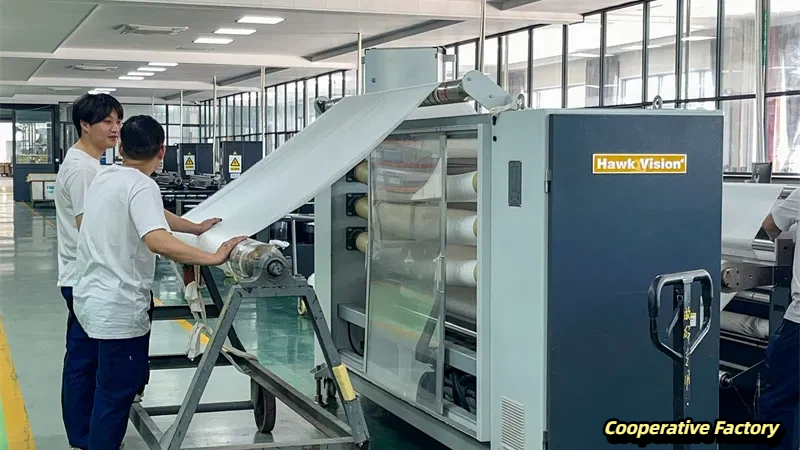
For cellulosics this is the highest-risk stage, and the one that decides whether your bulk matches your sample. The ten-step discipline below, as documented in Ohyeah Textile's process, is a good benchmark to audit any supplier against:
| # | Step | Purpose | What fails if it's skipped |
|---|---|---|---|
| 1 | Batch control / greige grouping; greige separated and grouped strictly by machine number | Consistent weight and quality within each dye batch | GSM variation and shade variation within one delivery |
| 2 | Relaxation; fabric unwound and rested at least 24 hours | Releases knitting/weaving tension | Excess shrinkage, unstable width, twisted garments |
| 3 | Singeing | Burns off surface fuzz | Poor pilling resistance, hazy surface |
| 4 | Pretreatment / degreasing | Removes spinning and knitting lubricants and dust | Uneven dyeing, patches, spots |
| 5 | Sample dyeing (lab dip / L/D); colours tested repeatedly before bulk | Matches customer-approved standard | Bulk arrives off-shade; no defence in a dispute |
| 6 | Stable dyestuff selection | Minimises metamerism (colour shifting under different light sources) | Fabric matches in the showroom, mismatches in store lighting |
| 7 | pH control; fabric washed to target pH 4–7 (in-process target; the QC release specification is 4.0–7.5, see §6.3) | Skin safety and stability | Skin irritation, odour, yellowing, OEKO-TEX failure |
| 8 | Final setting; heat setting after high heat | Locks shrinkage, weight and width | Out-of-tolerance GSM and width; yield loss |
| 9 | Pre-shrinking | Minimal residual shrinkage, clean surface | Garments shrink after first wash |
| 10 | Cooling before packaging | Prevents heat-set creases and mildew risk | Permanent creases, packing damage |
Two questions on any mill audit will teach you more than a full factory tour: "How long do you relax fabric before dyeing?" and "Do you group greige by machine number for dye batches?" Mills that cannot answer these specifically tend to be the ones that later cause shade and shrinkage problems.
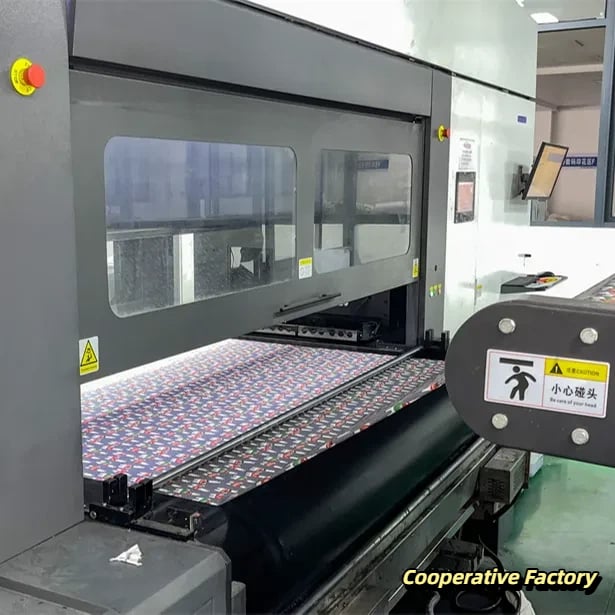
2.6 Stage 6: Printing (if applicable)
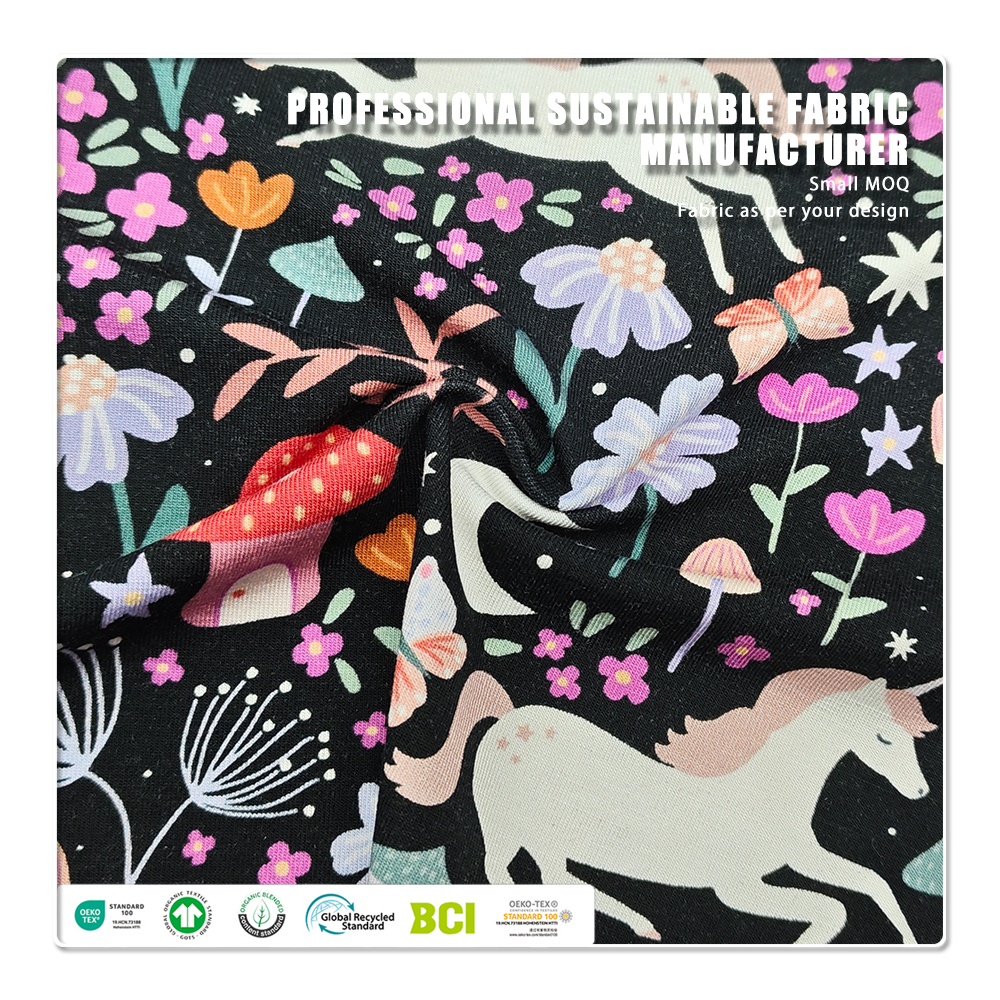
Printing adds a second full chain of risk. A disciplined print route, again using Ohyeah's documented sequence, runs:
Relaxation → Sewing (stitching the fabric side) → Pre-shaping → Singeing → Pretreatment → Sizing → Printing → Ageing (steaming) → Washing → Final setting
The three post-print steps are the ones buyers most often overlook, and they determine whether the print survives washing:
- Ageing / steaming: steam allows the dye to fully penetrate the fibre, delivering colour depth and colour fastness
- Washing: removes floating dye so there is no staining, no watermarks
- Final setting: stabilises width and weight for a flat, wrinkle-free surface
Pre-production control is equally structured: repeated sampling confirmation (S/O) until the customer approves, then a pre-bulk (first roll) produced on the actual machine and material set-up, to confirm pattern, colour, and repeat size against the standard before bulk runs.
Never approve bulk printing from a handmade strike-off alone. Require approval of a pre-bulk first roll from the production machine. A strike-off is made under ideal conditions; the first roll shows the production result.
2.7 Stage 7: Inspection and packing
Ohyeah's stated standard is 100% full inspection of every roll at packing, graded with the American 4-Point System, with defects marked and handled immediately and the inspection report shared with the customer. See §6 for how to specify and use this.
3. What Types of Bio-Based Fabric Are Available?
3.1 Master comparison: man-made cellulosics (the commercial core)
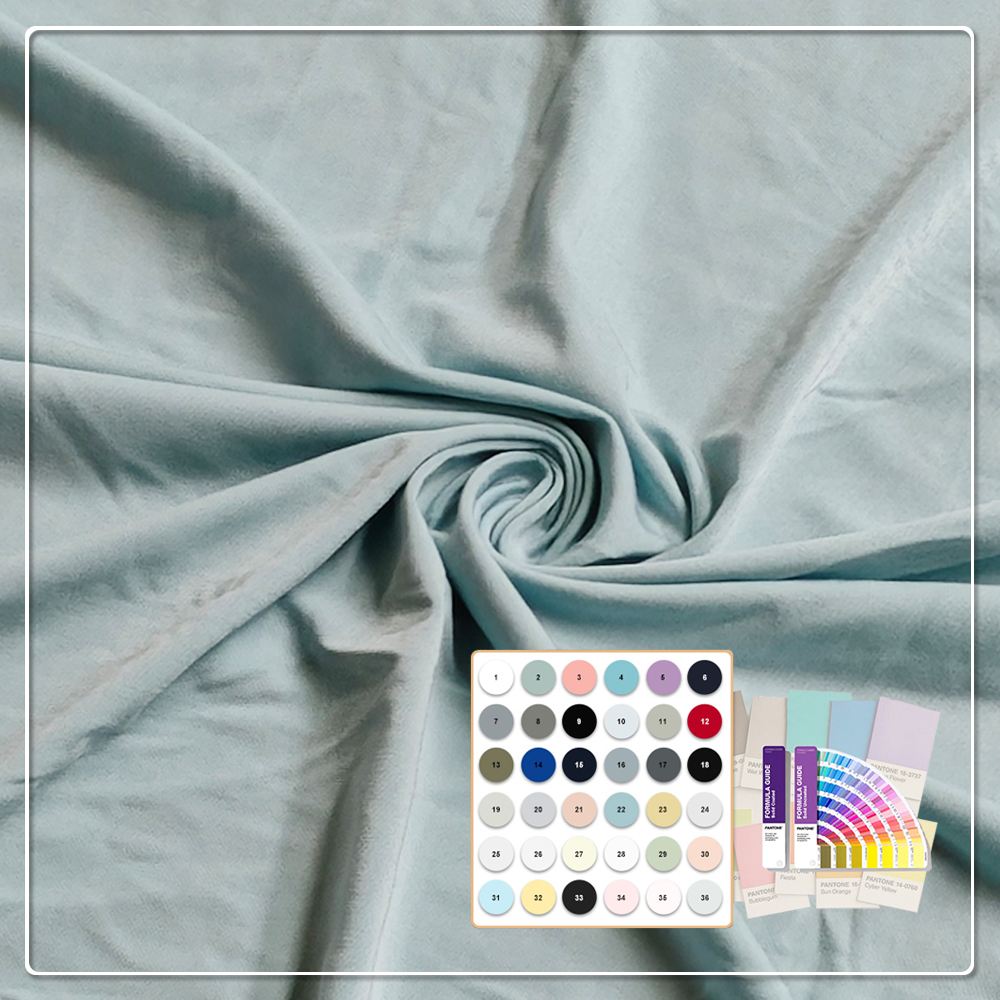
These four fibres cover the majority of bio-based apparel and home-textile volume, and buyers confuse them constantly. The differences between them are real and testable:
| Property | Viscose / Rayon | Bamboo Viscose | Modal (incl. Lenzing™ Modal) | TENCEL™ Lyocell |
|---|---|---|---|---|
| Feedstock | Wood pulp | Bamboo pulp | Beech / hardwood pulp | Eucalyptus, plantation-grown |
| Process | Viscose (CS₂) | Viscose (CS₂) | Modified viscose | Closed-loop NMMO solvent |
| Legal fibre name (US) | Rayon / Viscose | "Rayon from bamboo" | Modal | Lyocell |
| Hand feel | Fluid, soft, cool | Very soft, silky, cool | Soft, smooth, slightly denser | Smooth, silky, crisp-fluid |
| Wet strength | Low; weakest link | Low | Higher than viscose | Highest of the four |
| Shrinkage tendency | High if underfinished | High if underfinished | Moderate | Moderate–low |
| Pilling resistance | Moderate | Moderate | Good | Good (fibrillation must be finish-controlled) |
| Moisture management | Good absorbency | Good absorbency | Very good | Excellent; strong wicking |
| Dye uptake | Excellent, deep shades | Excellent | Excellent | Excellent |
| Typical relative price | Baseline (lowest) | Slightly above viscose | Mid | Highest |
| Traceability | Often weak/generic | Varies; FSC® possible | Strong if Lenzing-branded | Strongest; licensed, branded |
| Best for | Fluid dresses, linings, low-price basics | Babywear, underwear, bedding, tees | Underwear, tees, activewear-adjacent | Premium tees, shirting, bedding, activewear |
| Watch out for | Wet strength, shrinkage, upstream emissions | Naming compliance, biodegradability claims | Genuine Lenzing licence vs. generic modal | Genuine TENCEL™ licence; fibrillation |
Wet strength explains many complaints about viscose and bamboo viscose. Both lose strength when wet, so garments can distort, seams can grow, and knits can become baggy after washing. For frequently washed products such as babywear, bedding, and tees, choose Modal or Lyocell, or specify tighter dimensional-stability tolerances and a heavier GSM.
3.2 Natural bio-based fibres

| Fibre | Strengths | Limitations | Buyer notes |
|---|---|---|---|
| Organic cotton | Familiar, durable, breathable, easy to certify (GOTS/OCS) | High water use in some regions; premium over conventional; supply constrained | The safest "bio-based" claim to defend; certification infrastructure is mature. Verify transaction certificates lot by lot |
| Conventional cotton | Cheapest natural, universally available | Pesticide/water profile; no organic claim | Bio-based, but no sustainability story |
| Hemp | Very strong, low input crop, improves with wear | Coarser hand, limited fine-count supply, higher price | Softness improves with blending (hemp/cotton, hemp/lyocell) |
| Linen / flax | Strong, cool, prestigious, low input | Wrinkles heavily, expensive, seasonal | Blends reduce creasing complaints |
| Bamboo bast ("bamboo linen") | Natural mechanically processed bamboo; legitimate natural-fibre claim | Coarse, stiff, expensive, very limited supply | The only bamboo you may legally call a natural fibre. Confirm it is truly mechanical |
| Wool / silk (animal bio-based) | Performance, prestige | Animal-welfare scrutiny; different certification set (RWS, RMS) | Bio-based but requires welfare-standard evidence, not GOTS |
3.3 Bio-based synthetics

| Fibre | Bio-based content | Character | Buyer cautions |
|---|---|---|---|
| PLA (e.g. Ingeo) | ~100% bio-based | Low moisture regain, good wicking, matte | Low heat resistance; restricts dyeing, ironing, and industrial laundering. Industrially compostable, not home compostable |
| PTT (Sorona®) | ≈37% renewable | Excellent stretch recovery, soft, stain-resistant | Never call it "plant-based" without the percentage. Positioned as a partially bio-based performance polymer |
| Bio-PET | ≈30% bio-based (bio-MEG) | Chemically identical to PET | Recyclable in PET streams; not biodegradable |
| Bio-polyamide (PA11, castor) | High bio-based content | Strong, light, good elasticity | Expensive; niche/performance applications |
The rule for this family: always convert the marketing word into a number, and demand the test method. "Bio-based" with no percentage and no ASTM D6866 / EN 16785-1 report is an unsubstantiated claim you will be liable for.
3.4 Adjacent category: recycled polyester (REPT/rPET)

Recycled polyester is not bio-based. Its carbon is fossil-derived; it has simply been used before. It appears in nearly every eco-fabric range (including Ohyeah's) because it solves a different problem: waste diversion and durability. Use it when you need strength, dimensional stability, or low cost; certify it under GRS or RCS; and never let it be described as bio-based, plant-based, or biodegradable.
3.5 Blends in commercial orders
Pure fibres are rare in commercial production. The common constructions, and the logic behind them:
| Blend | Why it exists | Trade-off |
|---|---|---|
| 95% bamboo viscose / 5% spandex | Stretch for tees, leggings, underwear | Spandex is fossil-based and breaks biodegradability and single-fibre recyclability |
| Bamboo or lyocell / organic cotton | Softness + strength + cost control | Dual certification needed (GOTS + FSC/licence) |
| Lyocell / recycled polyester | Comfort + durability + lower price | Mixed claim: partly bio-based, partly recycled; state both accurately |
| Hemp / cotton | Softens hemp, keeps low-input story | Hand feel varies by ratio |
| Modal / cotton | Improves wet strength vs. pure viscose | Modest premium |
Claim discipline on blends: with a 95/5 bamboo/spandex fabric, the honest claim is "95% rayon from bamboo", not "bio-based fabric", and definitely not "biodegradable". That 5% elastane is enough to invalidate a compostability claim entirely.
4. What Should Buyers Compare Before Choosing a Bio-Based Fabric?
Do not compare fabrics on price and hand feel alone. That is how buyers end up with a cheap fabric that fails a wash test three months into a season. Compare across all nine dimensions below.
4.1 Technical specification: lock these in writing
A quotation that omits any of the following fields cannot be compared with another quotation:
| Parameter | Specify as | Why it matters |
|---|---|---|
| Fibre composition | Exact %, legal fibre names | Cost, performance, label compliance |
| Yarn count & spinning system | e.g. 32s ring-spun | Largest hidden price/quality variable |
| Construction | Single jersey, interlock, rib, twill, poplin, French terry | Drape, stability, cost |
| GSM (weight) | Target ± tolerance (e.g. 180gsm ±5%) | Cost is per kg; GSM is price |
| Width | Cuttable width ± tolerance | Determines fabric consumption and true garment cost |
| Finish | Enzyme wash, peach, silicone softener, anti-pilling, moisture-wicking | Hand feel and performance |
| Colour standard | Approved lab dip / Pantone + light source (e.g. D65) | Prevents shade disputes |
The commercial point on width is easy to miss. A mill quoting a lower price per kg on a narrower cuttable width can easily be the more expensive option once marker efficiency is calculated. Always convert competing quotes to cost per finished garment, not price per kg.
4.2 Performance targets: the numbers to write into your PO
Use these as your baseline specification. They align with the benchmarks a specialist eco-fabric mill should already be meeting (Ohyeah publishes colour fastness 4–5, shrinkage <5%, anti-pilling 3–4):
| Test | Target | Standard family |
|---|---|---|
| Colour fastness to washing | ≥ Grade 4 | ISO 105-C06 / AATCC 61 |
| Colour fastness to dry rubbing | ≥ Grade 4 | ISO 105-X12 / AATCC 8 |
| Colour fastness to wet rubbing | ≥ Grade 3 | ISO 105-X12 |
| Colour fastness to perspiration | ≥ Grade 4 | ISO 105-E04 |
| Colour fastness to light | ≥ Grade 4 | ISO 105-B02 |
| Dimensional stability (shrinkage) | ≤ 5% | ISO 6330 / AATCC 135 |
| Pilling | Grade 3–4 minimum | ISO 12945 / ASTM D3512 |
| pH | 4.0–7.5 | ISO 3071 |
| Weft skew / spirality | ≤ 5% | Measured, per roll |
| Batch-to-batch colour difference | ΔE ≤ 1.0 | Spectrophotometer + light box |
| Bursting / tensile strength | Application-dependent | ISO 13938 / ASTM D5034 |
Two points here are easy to miss. First, wet rubbing fastness at Grade 3 is the practical industry ceiling for deep shades on cellulosics. A Grade 4 wet-rub requirement for black bamboo viscose will either be refused or quietly missed. Deep and bright shades (black, red, navy, turquoise) are chronically the weakest performers; test those colours specifically rather than testing a pale standard. Second, pH 4.0–7.5 is not a formality: out-of-range pH causes skin irritation complaints and is a common OEKO-TEX failure point.
4.3 Sustainability claims: audit each one
For every claim the supplier makes, run this four-column test before you repeat it:
| Claim | Question to ask | Acceptable evidence | Red flag |
|---|---|---|---|
| "Bio-based" | What %, by what method? | ASTM D6866 / ISO 16620-2 / EN 16785-1 report on your lot | A number with no test report |
| "Biodegradable" | Under what conditions, in what timeframe, tested how? | EN 13432 / ISO 14855 / ASTM D6400 report | Unqualified "biodegradable"; especially on bamboo viscose |
| "Compostable" | Industrial or home? | TÜV OK compost / EN 13432 | Blurring industrial and home compostability |
| "Organic" | Certified to what, valid when? | GOTS or OCS scope certificate + transaction certificate | Certificate in a trading company's name only |
| "Recycled" | What %, what input? | GRS / RCS documents | "Eco polyester" with no certificate |
| "Sustainably sourced wood" | Chain of custody? | FSC® or PEFC CoC | FSC used as proof of clean dyeing |
4.3 Sustainability claims: audit each one (continued)
The rows below continue the four-column claims audit that began on the previous page. If a supplier puts any of these three phrases in front of you, the column on the left tells you what to ask next, the middle column gives the evidence worth accepting, and the final column flags the wording that should make you pause.
| Claim | Question to ask | Acceptable evidence | Red flag |
|---|---|---|---|
| "Non-toxic / safe" | Which standard, which class? | OEKO-TEX® STANDARD 100 (state the product class) | "Chemical-free"; meaningless |
| "Closed-loop" | Which process, whose fibre? | Lyocell/NMMO documentation; fibre producer name | Applied loosely to ordinary viscose |
| "Carbon neutral" | Reduction or offset? | Verified LCA | Offset-only claims; restricted in the EU from Sept 2026 |
4.4 Certifications: match the certificate to the claim
The full document protocol lives in §7, but one principle governs everything else: a certificate proves one specific thing about one specific entity for one specific period of time. It is a narrow instrument, and it is tempting to read more into it than it says. OEKO-TEX® does not prove organic content. GOTS does not prove biodegradability. FSC® says nothing about whether the dyehouse runs cleanly. GRS is silent on bio-based feedstock. Before you let a certificate stand in for a claim, check that the two actually line up.
4.5 Pricing: understand the structure, then benchmark live
Never accept a single number. The price of a bio-based fabric is a stack, and each layer contributes:
Price = fibre cost + yarn spinning + knitting/weaving + dyeing/finishing (+ printing) + certification/traceability overhead + testing + margin
Some orderings are structurally stable and hold across markets, so they are safe to reason with. From cheapest to most expensive:
Conventional polyester < conventional cotton < viscose/rayon < bamboo viscose < recycled polyester (certified) < organic cotton < Modal < TENCEL™ Lyocell < hemp/linen (fine counts) < bio-based synthetics (PLA/PTT/PA11)
What moves the number most in practice:
- Certified vs. uncertified. GOTS/GRS/OCS adds real cost: audits, segregated production runs, and transaction certificates all have to be paid for somewhere.
- Branded vs. generic fibre. TENCEL™ and Lenzing™ Modal carry a licence premium over generic lyocell and modal.
- Order size. Below the MOQ you pay a sampling or short-run surcharge.
- Colour count. Every additional colour is a separate dye batch with its own minimum.
- Deep or special shades. Black, neon, and turquoise cost more because the dyestuff and the extra fastness processing cost more.
- Finish stack. Each additional finish adds both cost and lead time.
One rule for quoting: do not take absolute per-metre or per-kg prices from any guide, including this one, because fibre and dyestuff prices move monthly. The only valid benchmark is three live quotations, taken on the same day, against an identical written specification. If one of the three comes in 25% or more below the others on a "certified" fabric, assume a difference in specification or certification and find it before you celebrate the saving.
4.6 Minimum order quantity (MOQ): ask five questions, not one
"What's your MOQ?" is an incomplete question. What you actually need to know:
1. MOQ per colour: the real constraint, because dye machines have minimum loads.
2. MOQ per total order, across all colours.
3. MOQ for greige/stock fabric versus custom dyed versus custom printed.
4. Print MOQ per design per colourway: usually the highest of the four.
5. Sampling/short-run surcharge below MOQ, and whether that surcharge is credited against a future bulk order.
The structural reality behind those answers is consistent from mill to mill:
- Stock and greige colours carry the lowest entry point: sometimes a single roll will do.
- A custom dyed colour is set by the dyeing machine's minimum batch, which is why "just 200 m in a custom navy" is so often refused or slapped with a heavy surcharge.
- Custom print sits at the top, because screens or rotary cylinders and the set-up time must be amortised across the run.
- Certified material (GOTS/GRS) often demands a higher MOQ, since the mill has to run a segregated batch.
A tactic that works when you are below MOQ: negotiate on colour count rather than volume. Commit your total metreage to fewer colours. Suppliers usually accept this, because it matches the dyehouse's real constraint.
4.7 Lead times: build a schedule, not a hope
Ask the supplier to break the quoted lead time into stages, then add your own buffers on top:
| Stage | What is happening | Buyer control point |
|---|---|---|
| Sampling / lab dip | Colour development, hand-feel samples | Approve in writing; keep the physical standard |
| Pre-production / pre-bulk | First roll on the real machine | Approve before bulk, especially for printing |
| Greige production | Knitting/weaving | Confirm initial-metre test results |
| Dyeing & finishing | Colour, hand, shrinkage, GSM locked | Request in-line data |
| Printing (if any) | Print + ageing + wash + set | Pre-bulk approval |
| Inspection & packing | 4-point, 100% roll inspection | Require the inspection report |
| Third-party testing | Lab confirmation | Book the lab in advance |
| Shipping | Sea/air/rail + customs | Confirm Incoterms and documents |
Plan for several scheduling constraints. The lead time a supplier quotes almost never includes your own approval time. Take six days to approve a lab dip, and that is six days added to the schedule.Certified and custom-printed fabric run longer, not only because production takes longer but because transaction certificates are issued after the shipment documentation. Peak season and Chinese New Year compress capacity severely; get written confirmation of dates around holidays and expect queues at the dyehouse. And never let third-party lab testing sit as the last step before your deadline, a failed wash-fastness test at that point means a full re-dye.
4.8 Testing: decide who tests, and on what
Be clear about the difference between the two testing layers, because they answer different questions.
A mill's in-house testing is fast, cheap, and continuous, which makes it the right tool for process control, though it cannot be independent. Third-party lab testing (SGS, Intertek, Bureau Veritas, TÜV, and similar) is independent and defensible, and you need it for compliance claims and for disputes.
A protocol that works: the mill tests every batch in-house, and you commission third-party testing on (a) the pre-production sample, (b) the first bulk lot, (c) periodic random lots, and (d) any lot carrying a regulated claim. One condition matters more than the rest: insist that third-party samples are cut from actual bulk production, not from a sample handed to you separately. A sample chosen for you is a sample chosen to pass.
4.9 Traceability and supplier reliability
Traceability means you can name every tier of the chain: fabric mill → dyehouse → knitter/weaver → spinner → fibre/pulp producer. For certified goods this is not optional, GOTS/GRS/OCS require an unbroken, documented chain.
A supplier who can tell you where its weaving, dyeing, and printing happen, and produce records from each step, is structurally more reliable than one who says "we handle everything, don't worry". Ohyeah Textile's published position of full transparency from weaving through dyeing/printing is the model to hold suppliers to: ask which facility performs each step, then ask for the QC records from each.
Reliability signals worth weighting when you evaluate a supplier:
- Years of specialisation in your specific fibre. For bamboo, a bamboo/cellulosic specialist beats a generalist trader.
- Existing export experience in your market. A mill already shipping to New Zealand, Australia, the US, Canada, Chile, Germany, and Vietnam has already met those markets' documentation and testing expectations.
- A named, accountable contact with real technical competence, not just a sales relationship.
- Willingness to share inspection reports proactively. This is the strongest single indicator on the list.
- Investment in capacity and capability: for example, Ohyeah's stated advanced discussions with Thygesen on a printing facility in Vietnam. That kind of signal matters for your tariff, capacity, and dual-sourcing planning.
5. Bio-Based Fabric vs. Recycled and Conventional Fabric
5.1 Head-to-head
The table below compares the three broad categories across the dimensions that actually drive buying decisions.
| Dimension | Bio-Based (bamboo viscose, lyocell, organic cotton, PLA) | Recycled (rPET/REPT, recycled cotton) | Conventional (virgin polyester, conventional cotton) |
|---|---|---|---|
| Feedstock | Renewable biological | Existing waste (bottles, textile scrap) | Virgin fossil / conventional crop |
| Renewable carbon | Yes | No; fossil carbon, reused | No |
| Diverts waste | No | Yes | No |
| Certification route | GOTS, OCS, FSC®, licences, ASTM D6866 | GRS, RCS | OEKO-TEX® only |
| Typical hand feel | Soft, fluid, breathable, natural | Technical, durable, less breathable | Varies |
| Durability | Moderate (cellulosics have low wet strength) | High | High (poly) / moderate (cotton) |
| Microfibre shedding | Sheds cellulosic fibre (biodegradable in most cases) | Sheds plastic microfibre | Sheds plastic microfibre |
| End of life | Pure cellulosics/naturals generally biodegrade; bio-synthetics vary | Recyclable in PET stream; not biodegradable | Poor |
| Relative cost | Mid to high | Low to mid | Lowest |
| Claim risk | High; naming and biodegradability traps | Moderate; % substantiation | Low (no claim made) |
| Best use | Next-to-skin comfort, natural positioning, babywear, bedding | Outerwear, bags, activewear, structure | Price-driven programmes |
5.2 The honest verdict on each
Bio-based is not automatically the greenest choice on the table. Its genuine advantage is a renewable feedstock and, for pure naturals and cellulosics, a benign end of life. Its weaknesses are just as real: conventional viscose processing uses CS₂ and can be highly polluting at badly run mills; cotton is water-intensive; and cellulosics are less durable than polyester, which can mean a garment needs replacing sooner. A poorly produced bamboo viscose can carry a worse environmental profile than a well-certified recycled polyester. The mill matters as much as the fibre.
Recycled solves waste, not fossil dependence. rPET keeps bottles out of landfill, and it is durable and cheap, but it is still plastic, it still sheds plastic microfibres, and it is usually downcycled rather than infinitely recycled. That makes it a legitimate, defensible choice; it simply is not a bio-based one.
Conventional is not automatically indefensible either. Its honest advantages are cost, availability, and durability in polyester. The problem only arises when it is presented as something greener than it is.
5.3 Choosing between them: decision rules
Match the category to the requirement:
- Next-to-skin softness, breathability, and a natural story → bio-based cellulosic (bamboo viscose, Modal, TENCEL™ Lyocell).
- Frequent washing and dimensional stability (bedding, babywear, tees) → Modal or Lyocell over plain viscose, or a blend with cotton.
- Abrasion resistance, structure, outdoor durability → recycled polyester.
- The most defensible certified claim with mature infrastructure → GOTS organic cotton.
- Lowest cost with no green claim → conventional.
- Stretch → accept a small elastane content and drop the biodegradability claim.
5.4 Combining categories intelligently
Mixed constructions are often the commercially correct answer. A lyocell/recycled-polyester blend can deliver comfort and durability at a workable price. The rule is to claim precisely: "48% TENCEL™ Lyocell / 47% recycled polyester / 5% elastane", with GRS documentation for the polyester and a Lenzing licence for the lyocell. What you should not do is aggregate that into "sustainable fabric", under the EU rules taking effect 27 September 2026, that generic phrasing is exactly what is restricted.
6. How Is Bio-Based Fabric Quality Controlled?
A credible mill runs quality control as a staged system with records kept at every gate, not as a final inspection bolted onto the end of production. The framework below follows the four-part structure documented in Ohyeah Textile's quality control system, Grey Fabric Weaving → Dyeing → Printing → Packaging, which works well as a template for auditing any cellulosic supplier.
6.1 The QC architecture
The sequence runs: IQC (incoming) → Process QC (in-line, per stage) → FQC (finished product) → Final 100% inspection at packing.
Ask your supplier to show you records at each of these four levels. A mill that can only produce the final inspection report is inspecting, not controlling.
6.2 Stage 1: Grey fabric weaving QC
Grey-fabric quality is assured from two directions at once: equipment-level prevention at the source, plus layered inspection as the fabric moves through.
Equipment advantages (source control)
- German imported needles and lubricants reduce friction and prevent small holes, loose yarn, repeating lines, and middle lines.
- Independent space isolation: each machine is individually isolated to prevent flying yarn and cross-contamination.
Multi-stage inspection (layered checks)
1. Initial metre testing: the first few metres are tested for fabric weight and width compliance.
2. Inspection during open width: a surface-defect check on the greige.
3. Rolling machine confirmation: the greige is re-inspected on the rolling machine.
6.3 Stage 2: Dyeing QC table
This is the level of specificity you should expect from a supplier. You can use the table directly as your own inspection specification.
| Control stage | Inspection item | Standard | Method |
|---|---|---|---|
| Dyeing process QC | Formula accuracy | Completely consistent with approved L/D | Check process sheet, formula sheet, L/D; per batch |
| Dyeing process QC | Lab-dip colour matching | Colour and shade consistent with customer-approved L/D | Manual visual matching under light box |
| Dyeing process QC | Level dyeing property | No streaks, colour spots, or colour difference on fabric surface | Manual visual full-width inspection |
| Dyeing process QC | Batch difference control | Colour difference between batches of same lot within acceptable range; consistent shade | Manual visual colour matching |
| Finishing process QC | Setting effect | Stable width and GSM, smooth surface | Steel tape measurement + visual |
| Finishing process QC | Pre-shrinking effect | Shrinkage ≤ 5% | Washing shrinkage test |
| Finishing process QC | Hand feel | Consistent with customer's sample; softness/smoothness to requirement | Manual hand feel vs. approved sample |
| Finished product FQC | Colour fastness | Washing ≥4, dry rubbing ≥4, wet rubbing ≥3, perspiration ≥4, light ≥4 | International standards, colour fastness tester |
| Finished product FQC | pH | 4.0–7.5 | pH meter, 3 samples per batch |
| Finished product FQC | Final appearance | No holes, oil stains, colour spots, streaks, colour difference, weft skew; smooth surface | Manual full-width inspection under light, metre-by-metre per roll |
| Finished product FQC | Packaging & label | Complete label: specification, weight, width, pattern, colour, batch, production date, inspector, environmental standard | Manual check against product |
6.4 Stage 3: Printing QC table
Printing needs its own control set, because the failure modes are different. Pre-production runs through sampling confirmation (S/O) until the customer approves, followed by a pre-bulk first roll on the actual machine/material set-up to verify pattern, colour, and repeat size.
| Control stage | Inspection item | Standard | Method |
|---|---|---|---|
| Printing process QC | Machine parameters | Speed, tension, scraper pressure, angle, paste flow per process sheet | Real-time monitoring, recorded hourly |
| Printing process QC | Pattern accuracy | No dislocation or offset | Full inspection per roll |
| Printing process QC | Colour paste uniformity | No precipitation, delamination, particles; no bottom exposure, streaks, colour difference | Manual visual full-width, full inspection per roll |
| Printing process QC | Printing appearance defects | No missing print, colour bleeding, fuzzy edges, colour spots, oil stains, creases, holes | Full-width inspection under light, metre-by-metre per roll |
| Printing process QC | Left–middle–right colour difference | ΔE ≤ 1, no streaks or spots | Manual visual full-width inspection |
| Post-processing QC | Steaming (ageing) effect | Temperature, time, humidity per process sheet; fastness to standard; no bleeding or staining | Parameter check + visual + fastness test |
| Post-processing QC | Washing effect | Temperature, time, degreaser per sheet; no loose colour, staining, or water marks | Visual + fastness test |
| Post-processing QC | Colour fixing effect | Fixing agent dosage, temperature, time per sheet; no discolouration, no hardening | Fastness test + hand feel |
| Post-processing QC | Setting effect | Stable width/weight, size difference ≤5%, weft skew ≤5%, smooth, no creases | Steel tape + weft skew meter + visual |
| Post-processing QC | Hand feel | Matches customer sample; no stiffness or roughness | Manual comparison with standard sample |
| Finished product FQC | Pattern appearance | Matches confirmed sample; clear, no misalignment, missing print, bleeding, frayed edges | Full-width under light, metre-by-metre per roll |
| Finished product FQC | Colour matching result | ΔE ≤ 1.0 vs. approved sample; consistent shade, no batch difference, no streaks | Computer (spectrophotometer) reading + visual under light box |
| Finished product FQC | Colour fastness | Washing ≥4, dry rub ≥4, wet rub ≥3, perspiration ≥4, light ≥4 | International standards |
| Finished product FQC | Dimensional stability | Weight, width, yarn density per process sheet; deviation within range | Re-inspect per IQC method |
| Finished product FQC | pH | 4.0–7.5 | pH meter, 3 samples per batch |
| Finished product FQC | Packaging label | Complete: specification, weight, width, pattern, colour, batch, date, inspector, environmental standard | Manual check |
6.5 Stage 4: Final inspection at packing: the 4-Point System
The 4-Point System is the industry benchmark, and the standard Ohyeah applies. Its operating rules:
- 100% full inspection of every roll: rather than a sample of rolls.
- Defects are graded with the American 4-Point System (ASTM D5430 family) to quantify them.
- Defects are marked and handled immediately, with zero tolerance.
- The inspection report is shared with the customer.
How the system works: each defect scores by size.
| Defect length (warp or weft) | Points |
|---|---|
| Up to 3 inches | 1 |
| Over 3 to 6 inches | 2 |
| Over 6 to 9 inches | 3 |
| Over 9 inches | 4 |
The rules around it: maximum 4 points per linear yard; holes and major defects generally score 4 regardless of size. Points are normalised to points per 100 square yards.
On acceptance, the commonly referenced industry threshold sits in the 20–40 points per 100 square yards range, with ≤40 points/100 sq yd widely used as the pass/Grade-A line. But this is a negotiated commercial term, not a fixed law, different mills and brands set different limits.
For every order, state your accepted 4-point limit in the purchase order (for example, "≤20 points per 100 square yards"), and state the remedy for exceeding it, replacement, discount, or rejection. Buyers who omit this discover at delivery that their supplier's internal limit was 40 and theirs was 20, with no contractual basis to reject.
6.6 The five buyer-side controls that prevent most disputes
1. Keep a sealed, signed, dated counter-sample of the approved lab dip and hand feel, and store it yourself. Without a physical standard, every colour dispute becomes an argument about memory.
2. Specify the light source for colour approval (for example, D65 daylight plus TL84 store light) and require a metamerism check across both. This is how you avoid fabric that matches in the mill and mismatches in the store.
3. Require the inspection report before shipment rather than after, and check the total points and the defect map.
4. Test the worst-case colour, not the easiest. Black, navy, red, and turquoise carry the fastness risk; a pale-grey test tells you nothing.
5. Run a wash test yourself on the pre-production sample, using your actual care-label instructions, and measure before/after in both directions. This single 90-minute test catches the majority of shrinkage complaints before they become returns.
7. What Certifications and Documents Should Buyers Request?
7.1 The core certification map
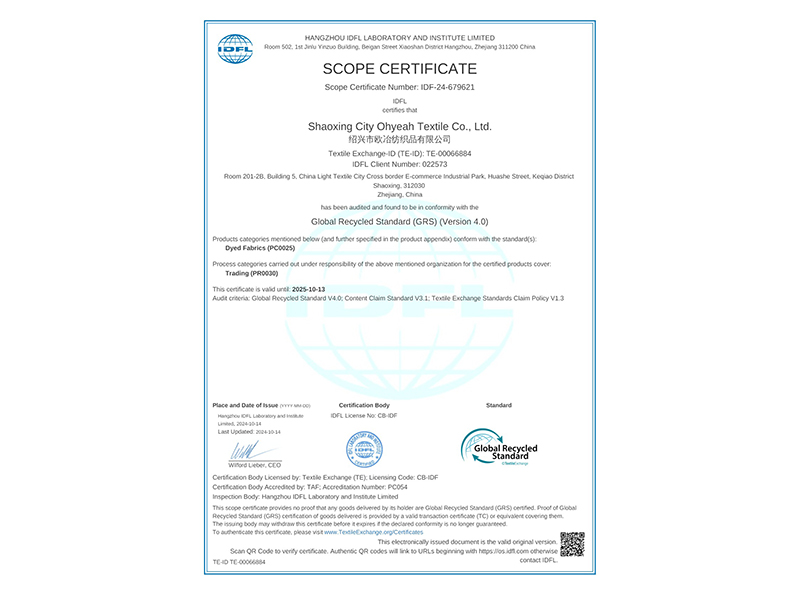
The table below sets out, for each certification a cellulosic buyer is likely to encounter, what it actually certifies, what it does not certify, and the situations where you need it.
| Certification | What it actually certifies | What it does not certify | When you need it |
|---|---|---|---|
| OEKO-TEX® STANDARD 100 | Tested for harmful substances; safe for human contact (by product class; Class I = baby) | Not organic, not bio-based, not recycled, not sustainable | Almost always; baseline chemical safety |
| GOTS (Global Organic Textile Standard) | Organic fibre content ≥70/95% plus ecological and social criteria across processing, manufacturing, packaging, labelling, trading, distribution | Not biodegradability, not bio-based % | Organic cotton claims; the most comprehensive textile standard |
| OCS (Organic Content Standard) | Amount of organic raw material in the final product, chain of custody | No processing/social criteria (lighter than GOTS) | Organic content claims without full GOTS processing scope |
| GRS (Global Recycled Standard) | Recycled content + environmental and social practices in production + chemical restrictions | Nothing about bio-based | Recycled polyester (REPT), recycled cotton |
| RCS (Recycled Claim Standard) | Recycled content and chain of custody only | No social/environmental criteria | Simple recycled-content verification |
| FSC® | Responsible forest management and chain of custody for wood/pulp | Nothing about dyeing, chemicals, or the fabric mill | Viscose, bamboo, Modal, Lyocell; wood/pulp origin |
| Lenzing™ / TENCEL™ licence | Genuine Lenzing fibre used, with the right to use the trademark | Not a fabric quality guarantee | Whenever you market TENCEL™ or Lenzing™ Modal by name |
| ASTM D6866 / ISO 16620-2 | Bio-based carbon content % via radiocarbon (¹⁴C) analysis | Not biodegradability, not sustainability | Any specific "% bio-based" claim |
| EN 16785-1 | Total bio-based content (radiocarbon + elemental analysis); broader than bio-based carbon alone | Not biodegradability | Bio-based % claims in the EU |
| EN 13432 / ASTM D6400 / ISO 14855 | Industrial compostability / biodegradation under defined conditions | Not home compostability unless separately certified | Any biodegradable or compostable claim |
| bluesign® | Chemical and resource management at the production site | Not fibre origin | Deeper chemical-management assurance |
| ZDHC MRSL | Restricted substances in chemical inputs to the dyehouse | Not fibre content | Brand programmes with chemical requirements |
| RWS / RMS | Animal welfare (wool/mohair) | Irrelevant to plant fibres | Wool/animal bio-based fibres |
Ohyeah Textile's stated certification set, OEKO-TEX®, GRS, GOTS, OCS, FSC®, covers chemical safety, organic content, recycled content, and wood origin. Together, these certificates cover the main claim categories used by a cellulosic mill. Note what it does not include: bio-based % or compostability certification. That gap reinforces the key lesson of this section. Map your intended marketing claim to a specific certificate before you order, and commission any missing test yourself rather than assuming it exists.
7.2 Scope certificate vs. transaction certificate: the distinction that catches buyers
This is the most common documentary failure in certified-material sourcing, and it is easy to miss because both documents are called "certificates".
| Document | What it is | What it proves |
|---|---|---|
| Scope Certificate (SC) | Certifies that a company/facility is certified for certain processes and product categories, valid for a stated period | That the supplier is capable of producing certified goods |
| Transaction Certificate (TC) | Certifies that a specific shipment of a specific quantity is certified material | That your actual goods are certified |
A scope certificate alone does not make your order certified. A certified mill can, deliberately or accidentally, ship you uncertified fabric. The TC is the only document that ties the certification to your shipment, so always request it. And build it into your document timeline: TCs are typically issued at or after shipment, not before.
7.3 How to verify a certificate is real
Do not accept a PDF at face value. Certificate fraud and expired-certificate reuse are both common enough to verify against every time.
1. Check the certificate itself: validity dates, the exact legal-entity name, the facility address, the certification body, the licence/certificate number, and the listed product categories. A certificate covering "knitted fabric" does not cover printed fabric if printing is out of scope.
2. Verify in the official databases. For GRS, RCS, and OCS, Textile Exchange runs a public "Find a Certified Company" directory plus a transaction-certificate authentication database: the source of truth for valid TCs issued by active certification bodies since January 2022. For GOTS, use the Global Standards / GOTS public database. For FSC®, use the FSC public certificate search. For OEKO-TEX®, verify the certificate number in the OEKO-TEX® online validation tool. Certification-body sites (Ecocert, Control Union, Bureau Veritas, Eurofins, and others) mostly offer client verification and publish suspensions and withdrawals.
3. Confirm the entity matches your actual supplier. If your invoice comes from a trading company but the certificate names a different mill, you need the chain documented: otherwise your goods are not covered.
4. Watch for suspensions and withdrawals, not just expiry. A certificate can look perfectly valid and be suspended.
7.4 The document pack to request: copy this list into your RFQ
Company and compliance
1. Business licence / company registration
2. All relevant certificates: scope certificates (OEKO-TEX®, GOTS, OCS, GRS, FSC®, any fibre licence)
3. Certificate numbers for independent database verification
4. Confirmation of which facility performs weaving, dyeing, printing, finishing
Product-specific 5. Full technical data sheet: composition, yarn count, construction, GSM, width, finish 6. Third-party test reports: colour fastness (wash, dry rub, wet rub, perspiration, light), shrinkage, pilling, pH, strength 7. Any bio-based content report (ASTM D6866 / EN 16785-1) if a % is claimed 8. Any biodegradability/compostability report (EN 13432 / ASTM D6400) if such a claim is made 9. Care instructions validated by wash testing 10. Fibre content labelling wording: confirmed against your market's rules (e.g. "rayon from bamboo" for the US)
Order-specific 11. Transaction Certificate (TC) for your shipment, for every certified claim 12. Approved lab dip / colour standard, signed and dated 13. Pre-production and pre-bulk (first roll) approval records 14. 4-Point inspection report for the shipment, with total points and defect map 15. Roll-by-roll packing list: roll number, metreage, weight, width, batch 16. Label copy per roll: specification, weight, width, pattern, colour, batch, production date, inspector, environmental standard 17. Commercial documents: invoice, packing list, bill of lading, certificate of origin 18. MSDS / chemical declarations where required by your market
7.5 Substantiation file: the discipline the 2026 rules demand
For every green claim on your product page, hangtag, or packaging, keep a file containing: the exact claim wording, the standard it relies on, the test report or certificate (with number), the lot/shipment it applies to, and the expiry/renewal date.
This matters because of the timeline established in §1.5. The provisions of the EU's Directive (EU) 2024/825 become enforceable from 27 September 2026, banning generic environmental claims without demonstrated excellent environmental performance, while the FTC continues to police fibre naming and unqualified biodegradability claims in the US. Claims are now a documentation discipline, not a copywriting exercise. Assign one person to own this file.
8. How to Source Bio-Based Fabric from a Reliable Manufacturer
8.1 Choose your supplier type deliberately
The supplier type affects pricing, MOQ flexibility, documentation, and the amount of verification you must handle yourself. The trade-offs are summarised below for the three types that matter for cellulosic buyers.
| Type | Advantages | Disadvantages | Best for |
|---|---|---|---|
| Vertically integrated mill (knits/weaves + dyes + finishes) | Best control, traceability, accountability; fewest hand-offs | Higher MOQ; less flexible on odd requests | Repeat programmes, certified goods |
| Specialist fabric mill / manufacturer-exporter | Deep expertise in a fibre family; direct process control; export-ready documentation | May outsource one stage; verify which | Most brands buying cellulosics |
| Trading company / agent | Low MOQ, wide range, one point of contact, easier communication | Opaque origin; margin stack; certificates may not be in their name | Small orders, market testing |
| Type | Advantages | Disadvantages | Best for |
| Converter / jobber | Stock service, immediate delivery | No customisation; unknown provenance | Sampling, urgent gaps |
Buying through a trading company can work perfectly well.What changes the picture is documentation: you must insist on the mill's own certificates plus a transaction certificate covering your shipment. Without both, your certified claim has no documentary basis.
8.2 Qualification signals that predict reliability

Give these signals the most weight when comparing candidates:
- A mill with more than a decade of focus on bamboo and eco-cellulosics has usually solved the fibre-specific problems, among them wet strength, spirality, and deep-shade fastness, before you run into them. Ohyeah Textile, with roughly fourteen years of specialisation and a stated Top-1 bamboo fabric ranking on Alibaba, is the sort of supplier that anticipates these issues; a generalist will not.
- An export track record in your market counts for a lot, because a supplier that has shipped to New Zealand, Australia, Vietnam, the US, Canada, Chile, and Germany has already navigated the testing, labelling, and documentation expectations of those markets.
- Certification breadth should match the claims you intend to make. OEKO-TEX®, GOTS, OCS, GRS, and FSC® each support a different type of claim.
- Look for a documented QC system built on named tables and thresholds. A supplier who can hand over a QC management table with inspection items, standards, and methods, of the kind shown in §6, offers stronger evidence than a factory tour.
- Transparency is easiest to judge by behaviour: inspection reports that arrive as standard practice rather than only when requested.
- A named technical contact with authority speeds up problem solving. When a general manager or technical lead engages personally on specifications, as Ohyeah's GM John Sun does, issues tend to get resolved faster than through an anonymous sales inbox.
- An investment and capacity roadmap tells you where the supplier is heading. Ohyeah, for example, states it is in advanced discussions with Thygesen about a printing facility in Vietnam, which is directly relevant if you need tariff diversification or dual-country sourcing.
8.3 The nine-step sourcing workflow
1. Define the specification before you contact anyone. Write down the fibre composition, yarn count and spinning system, construction, GSM with tolerance, cuttable width, finish, performance targets (§4.2), required certifications, the claim wording you intend to use, target quantity, colour count, and required delivery date. The quality of your brief sets the ceiling for the quality of every quote you receive.
2. Shortlist three to five suppliers across at least two supplier types, prioritising specialists in your fibre.
3. Issue an identical written RFQ to all of them, including the §7.4 document list. Require them to quote against your specification rather than propose their own, and if they propose an alternative, ask for it as a clearly separated second option.
4. Verify certificates independently in the official databases (§7.3) before investing in sampling. The step takes about thirty minutes and eliminates unqualified suppliers early.
5. Order hangers/headers first, then lab dips. Assess hand feel, weight, and construction before developing colour on any fabric, and only work on colour once the fabric passes. Approve each lab dip in writing under a specified light source and keep your sealed counter-sample.
6. Commission third-party testing on the pre-production sample, covering the risky colour and testing shrinkage with your actual care instructions. Do not skip this to save time: it is the cheapest failure point in the entire process.
7. Require pre-production and pre-bulk approval. For printing, insist on a first-roll pre-bulk from the production machine (§2.6). For dyeing, confirm the bulk-batch shade against your standard before the full run proceeds.
8. Contract properly. Your PO or agreement should state: the full specification; performance thresholds with test standards; the 4-point acceptance limit and remedy; the inspection report as a shipment condition; the TC delivery requirement; packing and labelling requirements; lead time with milestone dates; payment terms tied to inspection; and the Incoterms.
9. Inspect, then close the loop. Review the 4-point report before shipment, check rolls against the packing list on arrival, run your own confirmation wash test on a random roll, and log performance (on-time percentage, defect points, shade accuracy, responsiveness) into a scorecard that feeds the next order.
8.4 Negotiating without damaging quality
- Aim your negotiation at the colour count instead of at specification corners. Consolidating to fewer colours reduces the dyehouse's cost and lowers your price without touching the specification.
- Offer a volume commitment in exchange for MOQ flexibility. An annual forecast often unlocks lower per-order MOQs.
- Never negotiate away the inspection report, the TC, or the testing. These cost little and are your only protection. Treat any offer to "save cost" by skipping testing as a warning sign.
- Understand what a low price implies. Aggressive pricing on certified fabric usually means one of the following: uncertified material substituted, a lighter GSM, a cheaper yarn or spinning system, a narrower width, or reduced finishing. Find out which one, then decide whether it is acceptable.
- Ask for the sampling cost to be credited against the bulk order. Suppliers commonly grant this.
8.5 Building a relationship that improves outcomes
Suppliers reserve their best capacity and attention for buyers who are clear, decisive, and prompt with payment. Approve samples quickly, give consolidated feedback instead of drip-feeding changes, forecast honestly, and treat the technical contact as a partner rather than an order-taker. After two or three seasons you will see better shade consistency and shorter lead times, because your orders land in better dye slots and stay with the same technicians.
9. Common Buying Risks and How to Prevent Them
9.1 Risk register
| # | Risk | Why it happens | How it shows up | Prevention |
|---|---|---|---|---|
| 1 | Mislabelled "bamboo" as a natural fibre | Marketing habit; supplier follows local convention | Customs issues, regulatory action, retailer delisting | Specify the legal wording "rayon from bamboo" in the PO and label specification (§1.4) |
| 2 | Unsubstantiated "biodegradable" claim | Assumed because the fibre is plant-based | Regulatory exposure; FTC has stated there is no scientific evidence that rayon-from-bamboo products are biodegradable | Only claim with EN 13432 / ASTM D6400 testing on your material; never claim it on elastane blends |
| 3 | Generic green claims ("eco", "sustainable") | Copy written before evidence gathered | Unlawful in the EU from 27 Sept 2026 without demonstrated excellent environmental performance | Replace adjectives with certified specifics; keep a substantiation file (§7.5) |
| 4 | Certificate is valid but doesn't cover your goods | Scope certificate accepted instead of transaction certificate | Claim collapses in an audit | Always obtain the TC and authenticate it in the Textile Exchange database (§7.2–7.3) |
| 5 | Expired, suspended, or borrowed certificate | Reused PDFs; certificate belongs to a different entity | Discovered during brand or retailer audit | Verify number, dates, legal entity, address, and scope in the official database |
| 6 | Bio-based % claimed with no test | Supplier repeats a fibre producer's marketing number | Claim unsupportable for your lot | Require ASTM D6866 / EN 16785-1; remember Sorona® PTT ≈37%, bio-PET ≈30% |
| 7 | Excessive shrinkage after washing | Insufficient relaxation, no pre-shrinking, rushed finishing | Returns, garment distortion, remakes | Specify ≤5%; verify 24h relaxation and pre-shrinking; run your own wash test with your care label |
| 8 | Batch-to-batch shade variation | Greige not grouped by machine; unstable dyestuff; multiple dye lots | Panels don't match; visible in-store | Require greige grouping by machine number, ΔE ≤1.0, and one dye lot per colour where possible |
| 9 | Metamerism (matches in mill, mismatches in store) | Colour approved under one light source only | Customer complaints, markdowns | Approve under two light sources (e.g. D65 + TL84); require stable dyestuff selection |
| 10 | Poor wet rubbing fastness on deep shades | Physical limit of cellulosics; deep shades hardest | Colour transfer onto skin and other garments | Accept ≥Grade 3 wet rub as realistic; test the darkest colour; consider a fixing treatment |
| 11 | Low wet strength failures (viscose/bamboo viscose) | Inherent fibre property ignored at design stage | Seam slippage, bagging, holes after washing | Choose Modal or Lyocell for frequently washed items; increase GSM; blend with cotton |
| 12 | Pilling complaints | Singeing skipped; wrong yarn/spinning system | Product looks worn quickly | Specify Grade 3–4 minimum; confirm singeing; consider vortex-spun yarn |
| 13 | pH out of range | Inadequate washing after dyeing | Skin irritation; OEKO-TEX failure | Specify pH 4.0–7.5, 3 samples per batch |
| 14 | Weft skew / spirality in knits | Tension and setting problems | Garments twist after washing | Specify ≤5%, measured with a weft skew meter |
| 15 | GSM and width below spec | Silent cost reduction | Higher consumption, lower yield, thin handfeel | Specify tolerances; require initial-metre testing records; verify on arrival |
| 16 | Print defects discovered in bulk | Approved on strike-off only, not first roll | Whole print run unusable | Mandate pre-bulk first-roll approval from the production machine |
| 17 | Certified and conventional material mixed | No physical segregation on the floor | Certification invalid for the lot | Confirm machine isolation and segregated storage; check TC quantities against your order |
| 18 | Inspection report withheld or cosmetic | No contractual requirement | Defects found only after payment | Make the 4-point report a condition of shipment; specify your acceptance limit and remedy |
| 19 | 4-point limit never agreed | Buyer assumed a standard exists | No basis to reject marginal goods | Write your limit (e.g. ≤20 or ≤40 points/100 sq yd) into the PO; it is negotiable, not fixed |
| 20 | Lead time overrun | Buyer's own approval time excluded; holiday capacity crunch; testing left last | Missed launch dates | Get a stage-by-stage timeline; build buffers; book labs early; confirm dates around Chinese New Year |
| 21 | MOQ surprise per colour | Only total MOQ discussed | Order re-planned late or surcharged | Ask all five MOQ questions (§4.6) up front |
| 22 | Hidden subcontracting | Mill outsources dyeing or printing quietly | Unknown quality and compliance exposure | Ask which facility performs each stage; require disclosure in writing |
| 23 | Trading company opacity | Certificates in the agent's name only | Cannot trace or substantiate | Require the mill's identity, mill certificates, and a shipment TC |
| 24 | Sample-to-bulk mismatch ("golden sample") | Sample made under ideal, non-production conditions | Bulk is visibly inferior | Require pre-production sample from production equipment; keep sealed counter-samples |
| 25 | Single-source dependency | One mill, one country | Tariff, capacity, or disruption shock | Qualify a second supplier; note capacity expansion options (e.g. Vietnam printing capability) |
| 26 | Payment fully released before verification | Weak terms | No leverage when defects appear | Tie the final tranche to inspection report acceptance and TC delivery |
| 27 | Microfibre/greenwash backlash on blends | "Sustainable" applied to a mostly synthetic blend | Reputational damage | State exact composition and certify each component separately |
| 28 | Care instructions untested | Copied from a generic template | Consumer complaints; garments ruined | Validate care labels by actual wash testing before printing labels |
9.2 The five pitfalls behind the costliest failures
If you retain only five points from this section, retain these:
1. A fibre-content label must not identify regenerated bamboo fabric simply as "bamboo". Use "rayon from bamboo". This is both a frequent error and a high-consequence one.
2. A scope certificate does not certify your shipment. Only a transaction certificate ties the certified claim to your goods.
3. Do not approve colour from a strike-off or under a single light source. Require a pre-bulk first roll and check it under two light sources.
4. Put the 4-Point System acceptance limit in the PO. Without an agreed limit, you may have no contractual basis for rejecting marginal fabric.
5. Schedule third-party testing before the final deadline. A late fastness failure can cost the entire lot and the launch date.
10. Bio-Based Fabric Buyer Checklist
Use this checklist in sequence, from the initial specification to the reorder decision.
Phase 1: Define the requirement before contacting suppliers
- Choose the fibre family (natural, MMCF, or bio-synthetic) according to the end use.
- Assess wet-strength requirements. For frequently washed products, consider Modal or Lyocell instead of plain viscose.
- Set the exact fibre composition and percentages.
- Draft the legal fibre-content wording for every target market, such as "95% Rayon from Bamboo / 5% Spandex".
- List each marketing claim and match it to the certificate or test that will support it.
- Specify the yarn count and spinning system.
- Specify the construction, GSM and tolerance, and cuttable width and tolerance.
- State the finish requirements.
- Write the performance targets for fastness, shrinkage, pilling, pH, and skew, together with the test standards.
- List the required certifications.
- Fix the quantity, colour count, and required delivery date.
- Check target-market compliance, including FTC fibre naming and Directive (EU) 2024/825 from 27 September 2026.
Phase 2: Qualify the supplier
- Shortlist three to five suppliers, including specialists in the selected fibre.
- Identify each supplier type: integrated mill, specialist mill, trader, or converter.
- Confirm how many years the supplier has specialised in the fibre.
- Confirm export experience in the target market.
- Obtain written disclosure of the facilities responsible for weaving, dyeing, printing, and finishing.
- Require disclosure of all subcontracting.
- Obtain the business licence.
- Obtain all applicable certificates, including OEKO-TEX®, GOTS, OCS, GRS, FSC®, and fibre licences.
- Verify every certificate in the issuing organisation's official database.
- Match the legal entity, address, validity dates, and product scope to the supplier and product.
- Check for suspensions or withdrawals.
- Review the documented QC system, including IQC, process QC, FQC, and final inspection.
- Establish a named technical contact.
Phase 3: Sample and test
- Send the same written RFQ to every shortlisted supplier.
- Obtain three live quotations for the same specification during the same week.
- Compare quotations on cost per finished garment, accounting for width and GSM.
- Assess hangers or headers for hand feel, weight, and construction.
- Approve lab dips in writing under two specified light sources.
- Retain a sealed, signed, and dated counter-sample.
- Check metamerism across the specified light sources.
- Require the pre-production sample to be made on production equipment.
- Commission third-party testing on the pre-production sample.
- Include the highest-risk, deepest colour in testing.
- Run a wash test using the intended care-label instructions and measure both directions before and after washing.
- Obtain an ASTM D6866 or EN 16785-1 report if a bio-based percentage will be claimed.
- Obtain an EN 13432 or ASTM D6400 report if biodegradability or compostability will be claimed.
- Validate the care instructions by wash testing before labels are printed.
Phase 4: Agree the commercial terms
- Confirm the MOQ per colour.
- Confirm the MOQ for the total order.
- Confirm separate MOQs for greige, custom-dyed, and custom-printed fabric.
- Confirm the print MOQ per design and colourway.
- Agree the below-MOQ surcharge and whether the sampling charge will be credited against the bulk order.
- Obtain a stage-by-stage schedule covering sampling, pre-bulk, greige production, dyeing and finishing, printing, inspection, testing, and shipping.
- Add time for your own approvals.
- Confirm holiday and peak-season capacity in writing.
- Put the 4-Point System acceptance limit in the PO, such as ≤20 or ≤40 points per 100 square yards, with a remedy for exceeding it.
- Make the inspection report a condition of shipment.
- Make delivery of the transaction certificate a contractual requirement.
- Specify packing and per-roll labelling.
- Tie payment terms to inspection acceptance and document delivery.
- Agree the Incoterms.
Phase 5: Control production and pre-shipment
- Obtain the initial-metre test results for weight and width.
- Confirm that greige fabric is grouped by machine number for dye batches.
- Confirm at least 24 hours of relaxation before dyeing.
- Approve the bulk shade against the sealed standard, with ΔE ≤ 1.0.
- For printing, approve a pre-bulk first roll for pattern, colour, and repeat size.
- Confirm physical segregation of certified and conventional material through machine isolation and separate storage.
- Receive and review the 4-Point System report before shipment, including total points and the defect map.
- Obtain final FQC data for fastness, shrinkage, pH, appearance, and dimensional stability.
- Receive the transaction certificate and authenticate it in the official database.
- Reconcile the TC quantity with the order quantity.
- Obtain a roll-by-roll packing list showing roll number, metreage, weight, width, and batch.
- Verify each roll label: specification, weight, width, pattern, colour, batch, production date, inspector, and environmental standard.
- Check that the invoice, packing list, bill of lading, certificate of origin, and any required MSDS are complete.
Phase 6: Check receipt and close the order
- Count the rolls and reconcile them with the packing list.
- Inspect random rolls against the 4-Point System report.
- Run an independent wash and shrinkage test on a random production roll.
- Check shade against the retained counter-sample under both specified light sources.
- Complete a substantiation file for every public claim, including wording, standard, certificate or report number, lot, and expiry date.
- Update the supplier scorecard for on-time delivery, defect points, shade accuracy, document completeness, and responsiveness.
- Qualify a second supplier, or keep the qualification process active, to reduce single-source risk.
Quick reference: non-negotiable minimums
| Item | Minimum |
|---|---|
| Colour fastness to washing | Grade 4 |
| Colour fastness to dry rubbing | Grade 4 |
| Colour fastness to wet rubbing | Grade 3 |
| Colour fastness to perspiration | Grade 4 |
| Colour fastness to light | Grade 4 |
| Shrinkage | ≤ 5% |
| Pilling | Grade 3–4 |
| pH | 4.0–7.5 |
| Weft skew / size difference | ≤ 5% |
| Batch colour difference | ΔE ≤ 1.0 |
| Final inspection | 100% of rolls, 4-Point System, report shared |
| Documents | Scope certificate + Transaction Certificate |
Appendix A: Standards Quick Reference
| Purpose | Standard |
|---|---|
| Bio-based carbon content | ASTM D6866, ISO 16620-2 |
| Total bio-based content | EN 16785-1 |
| Industrial compostability | EN 13432, ASTM D6400, ASTM D6868 |
| Biodegradation testing | ISO 14855 |
| Organic textiles | GOTS; OCS (organic content) |
| Recycled content | GRS; RCS |
| Harmful substances | OEKO-TEX® STANDARD 100 |
| Forest / pulp chain of custody | FSC®, PEFC |
| Colour fastness to washing | ISO 105-C06, AATCC 61 |
| Colour fastness to rubbing/crocking | ISO 105-X12, AATCC 8 |
| Colour fastness to perspiration | ISO 105-E04 |
| Colour fastness to light | ISO 105-B02 |
| Dimensional stability | ISO 6330, AATCC 135 |
| Pilling | ISO 12945, ASTM D3512 |
| pH of aqueous extract | ISO 3071 |
| Bursting strength (knits) | ISO 13938 |
| Tensile strength (wovens) | ASTM D5034 |
| Fabric inspection (4-Point) | ASTM D5430 |
| EU consumer green claims | Directive (EU) 2024/825 (ECGT/EmpCo), enforceable 27 September 2026 |
| US fibre naming and green claims | FTC Textile Rules (16 CFR 303); FTC Green Guides |
Appendix B: Reference Supplier Profile
Shaoxing City Ohyeah Textile Co., Ltd. is used throughout this guide as a working example of a specialist eco-fabric manufacturer.
| Attribute | Detail |
|---|---|
| Positioning | Eco-friendly fabric expert; sustainable and high-quality textile solutions |
| Experience | About 14 years focused on eco-friendly fabrics, with deep specialisation in bamboo fibre |
| Leadership | John Sun, General Manager |
| Recognition | Consistently ranked a Top 1 bamboo fabric company on Alibaba |
| Export markets | New Zealand, Australia, Vietnam, US, Canada, Chile, Germany |
| Natural and plant-based range | Bamboo, organic cotton, rayon, Lenzing™ Modal |
| Innovation range | TENCEL™ Lyocell, recycled polyester (REPT), sustainable viscose blends, biodegradable options |
| Certifications | OEKO-TEX®, GRS, GOTS, OCS, FSC® |
| Stated performance | Colour fastness 4–5; shrinkage <5%; anti-pilling 3–4 |
| Traceability | Full transparency from weaving through dyeing and printing |
| Process stages | Greige weaving → dyeing and finishing (10-step) → printing (10-step) → 100% final inspection |
| Final inspection | 100% of every roll, American 4-Point System, report shared with customer |
| Forward capacity | Advanced discussions with Thygesen on a printing factory in Vietnam |
Supplier details in this appendix and elsewhere in the guide come from Ohyeah Textile's company and quality-control documentation. Verify all certificates independently in the official databases listed in §7.3 before placing an order.
Table of Contents
- How to Use This Guide
-
1. What Is Bio-Based Fabric?
- 1.1 The definition that matters commercially
- 1.2 The three families of bio-based fibre
- 1.3 Four independent axes: never conflate them
- 1.4 The terminology trap that generates fines: "bamboo fabric"
- 1.5 Why the regulatory clock is now the buyer's problem
- 1.6 Where a specialist supplier fits in the market
- 2. How Is Bio-Based Fabric Made?
- 3. What Types of Bio-Based Fabric Are Available?
-
4. What Should Buyers Compare Before Choosing a Bio-Based Fabric?
- 4.1 Technical specification: lock these in writing
- 4.2 Performance targets: the numbers to write into your PO
- 4.3 Sustainability claims: audit each one
- 4.3 Sustainability claims: audit each one (continued)
- 4.4 Certifications: match the certificate to the claim
- 4.5 Pricing: understand the structure, then benchmark live
- 4.6 Minimum order quantity (MOQ): ask five questions, not one
- 4.7 Lead times: build a schedule, not a hope
- 4.8 Testing: decide who tests, and on what
- 4.9 Traceability and supplier reliability
- 5. Bio-Based Fabric vs. Recycled and Conventional Fabric
- 6. How Is Bio-Based Fabric Quality Controlled?
- 7. What Certifications and Documents Should Buyers Request?
- 8. How to Source Bio-Based Fabric from a Reliable Manufacturer
- 9. Common Buying Risks and How to Prevent Them
- 10. Bio-Based Fabric Buyer Checklist
- Appendix A: Standards Quick Reference
- Appendix B: Reference Supplier Profile