 EN
EN
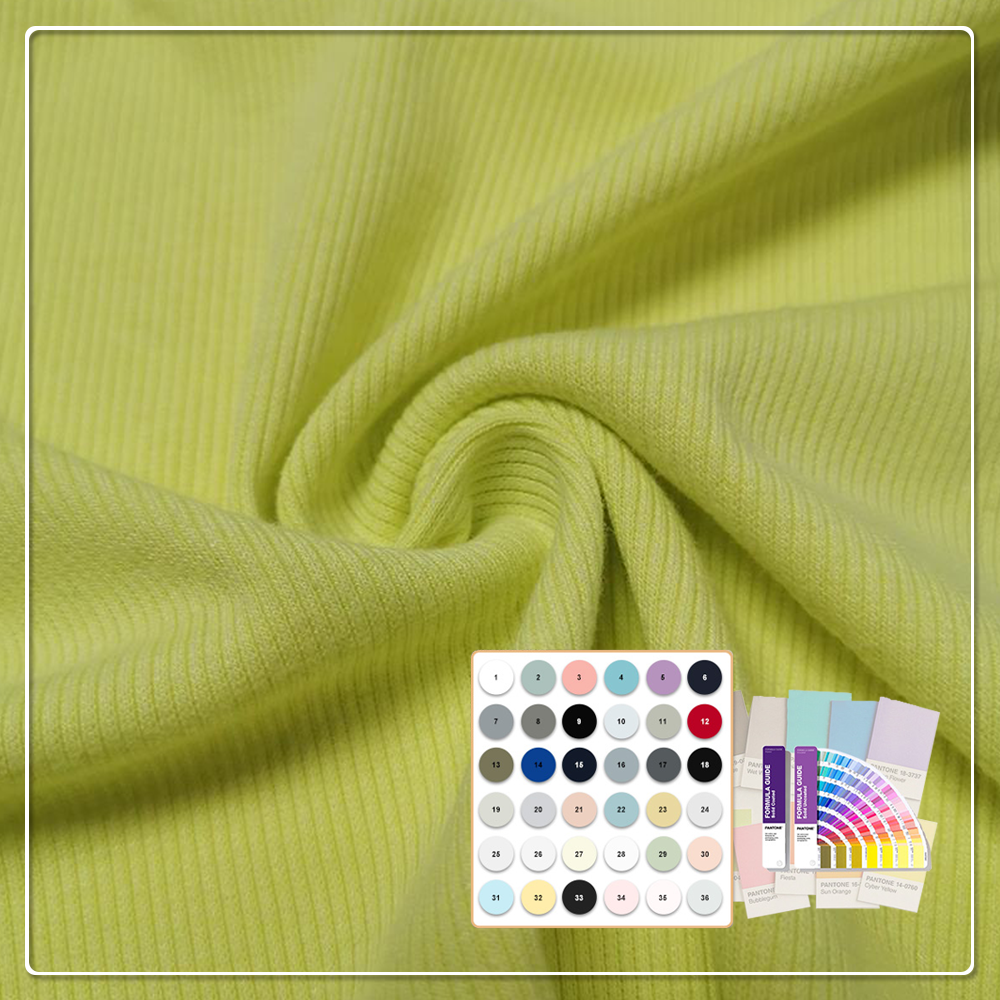
I am aware that the bamboo fabric is fast gaining popularity in the fashion as well as the home textile business and it has earned an incredible softness, natural sheen and excellent environmental attributes. Shaoxing City Ohyeah Textile Co., Ltd. has been specialized in OEKO-TEX, GOTS and GRS certified super-clean textile, and I know something about the peculiarities of such an outstanding material. An essential question, which I frequently hear among clients, is the following one: How can you find high-quality enduring prints on bamboo cloth and preserve its benefits as a natural one?
I would like to guide you through the best ways to print and the necessary details that should be followed so that your designs appear alive and long-lasting as they become sustainable.
Understanding Your Canvas: The Nature of Bamboo Knit
I do know that our bamboo knitted materials are mainly produced using a bamboo viscose, which has a high capacity to absorb, a smooth surface with great draping properties. These features make it a great printing medium to me because the dyes stain deep to provide rich color. Nonetheless, I never forget the fact that its absorbency and sensitivity to heat and pH demand a conscious attitude so that print clarity, colorfastness and luxurious hand-feel of the fabric could be preserved.
Recommended Printing Techniques
Digital Printing (Direct-to-Fabric):
I regard this as the best option when dealing with a very complicated design that is many-colored or when there is a photo design involved. I am aware that the absorbency of the fabric can be taken advantage of and thus water-based and environmentally-friendly inks can be easily bonded. I usually suggest a pre-treatment to make colour brighter before it is done to make it sharper and brighter beforehand. I are stressing on the importance of post printing fixation (steaming or heating). When using our bamboo fabrics, I will always be able to get a color fastness of 4-5 and the digital print will stay bright even after washing.
Screen Printing:
I use screen printing on bold graphics and bigger and solid color blocks. To avoid cracking a fabric I would recommend a formulation of inks that is flexible and stretchable to avoid movement. I would also consider reducing the curing temperature to ensure that the fiber is not hardened but instead remains soft. After developing a fabric with a controlled rate of 5% or less shrinkage, I am aware that designs would not shift and that they would be not distorted during the printing and finishing process.
Sublimation Printing:
It is my most effective method used on bamboo blends, especially when printing with recycled polyester (that is our specialty, certified GRS). I am aware that the sublimation dye will become gas and will be permanently attached to the synthetic fibers that will produce extremely bright and washable prints. In the case of pure bamboo, I observe that there is not as much sublimation, however, it is possible to work with special coating.
Critical Success Factors for Printing
Pre-treatment of fabrics is always emphasized by me, as an essential condition in digital printing. I ensure that there is an adequate pre-treatment solution to ensure that the ink droplets are kept sharp and colors vivid. I suggest the use of soft and environmentally friendly inks. I incline to acid dyes, reactive dyes, or special pigment inks that have been developed to suit cellulose fibers such as bamboo, which is consistent with the certification of our base fabrics by OEKO-TEX Standard 100. I also underline that it is better to manage the heat care because it may be sensitive to high and direct temperatures; in my opinion, temperatures of drying or curing and fixation should be controlled to prevent its destruction or too much shrinkage. Lastly, I would recommend a soft post-print wash to clean the garment of any extra ink or chemical so that the overall felt of the apparel is enhanced and the color is guaranteed to stay intact.
Why Partner with Ohyeah for Your Printed Bamboo Projects?
To my mind, printing is as good as the canvas where it is printed. I will engage in excellence at all levels whereby you will have a better, print ready product:
Certified Quality and Consistency: I will be able to support that our GOTS and OCS certifications not only assure organic content but also responsible processing, but also QC checks are rather strict regarding the weight, evenness, and color consistency.
Technical Knowledge: I am the manager of more than 100 circular knitting machines and a special production team, which will enable us to maximize the construction of fabrics that can be printed.
Scale and Support: I am sure to deliver 200 tons monthly to reliably service both the small creative work as well as large scale work. I give you fabric specification, shrinkage details, and handling information of your printers.
I am aware that using the bamboo fabric will be a step towards sustainable design. It turns out that through selecting the correct printing methods, and collaborating with a certified and experienced manufacturer, it is possible to turn this beautiful and environmentally friendly material into beautiful printed fabrics with a positive message.
I welcome you to come, with your designs to live in the bamboo knit, which is luxurious. We shall find out about our certified line of fabric goods and see what we can do to help your new sustainable line.